Pay Schedule Calculator
List your weekly or biweekly paydays for the year ahead and spot the two three-paycheck months worth planning for.
Your next paydays
| # | Payday | Gross |
|---|
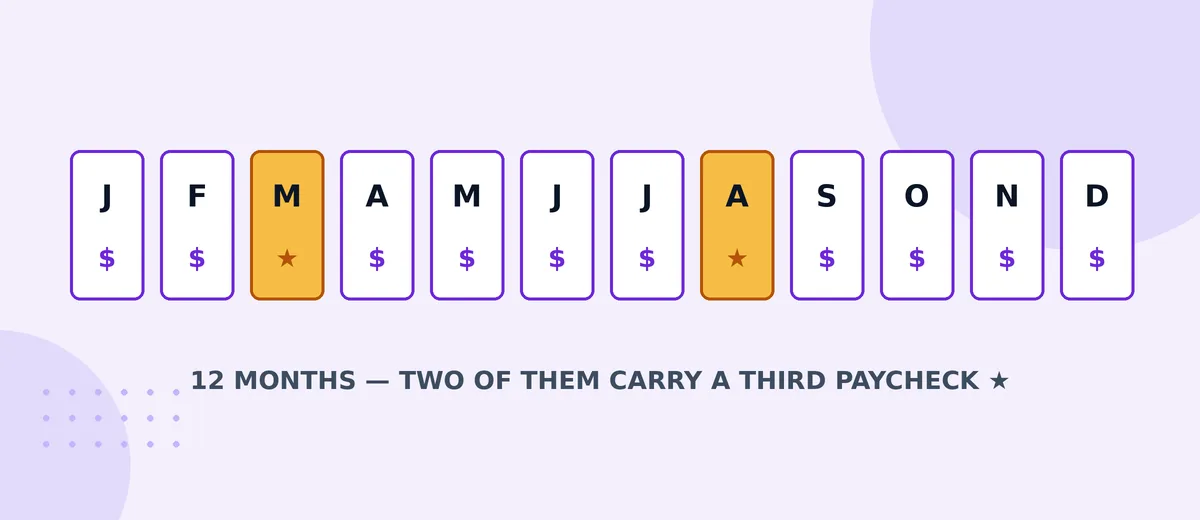
About the Pay Schedule Calculator
What it calculates. Your actual calendar of paydays: starting from your first payday of the year, it lists the next twelve weekly or biweekly paydays with the gross amount of each check, and flags the months that contain an extra check — the budgeting event biweekly workers get twice a year.
How the calculation works
Gross per check = annual salary ÷ pay periods (26 biweekly, 52 weekly). Paydays are then stepped forward 7 or 14 days at a time from the date you enter. A biweekly schedule produces 26 checks across 12 months, so exactly two months contain three paydays — the tool counts the full year and marks those months with a ★. Which months they are depends entirely on your first payday, which is why two coworkers on the same schedule can have different "extra check" months.
Limitations & common mistakes
- Holidays shift real paydays. When a payday lands on a bank holiday or weekend, most employers pay the business day before. The dates here are the unshifted schedule — check your employer's policy for exact deposit days.
- Semi-monthly is a different animal. Paid on fixed dates (e.g. the 15th and month-end), semi-monthly checks are larger and never create a three-check month. This tool covers weekly and biweekly schedules.
- The 27th-check year. Depending on which weekday payday falls on, a biweekly schedule occasionally produces 27 paydays in a calendar year — salaried staff usually still receive the same annual total, split differently.
Pay Schedule FAQ
- Why do I sometimes get three paychecks in a month?
- Because 26 biweekly checks cannot divide evenly into 12 months: ten months get two checks and two months get three. It is arithmetic, not a bonus.
- Is the third paycheck "extra" money?
- It is part of your normal annual salary arriving in a lump. It feels extra only if your monthly budget is built on two checks — which is exactly the habit worth keeping.
- When are the three-paycheck months in 2026?
- They depend on your first payday of the year. Enter it above and the ★ marks your two months precisely.
Related guide: Biweekly vs Semi-Monthly: Same Salary, Different Life →
Disclaimer: results are estimates for education only and are not tax, financial or legal advice. Verify your pay calendar with your employer's payroll department.